One of the crown jewels in the cocktail world is the Margarita. Like some of the classic French and Italian recipes every chef should know, the Margarita is something that every bartender knows. Since it’s such a well-known and simple cocktail you’d think getting a decent one would be easy. Well, that assumption would be wrong. The problems stem from judicious recipe modifications and the increased use of sugar in food and drink. What was once a well-balanced cocktail, is now a giant, fluorescent green, sugar laced, culinary nightmare. It’s not beyond repair, and hardcore Slurpee lovers may be surprised to find that the original Margarita is still an excellent drink.
The Margarita recipe is one of the easier cocktail recipes, and can be considered a “base cocktail”. This means the recipe/formula is the basis for many other cocktails. The Margarita is a modification of the Sidecar, which is a variation of the Daisy. This simplicity makes tweaking for personal tastes easy. However, sometimes these changes go a little too far.
The basic recipe mingles three ingredients, plus salt and ice. Gary Regan (Joy of Mixology) recommends a 3:2:1 formula, which is easy to remember and tastes good. Dale Degroff (The Essential Cocktail) has a similar recipe, but adjusts the ingredients a bit, for personal preference.
Margarita Recipes
| Gary Regans’ Recipe 1½ oz Tequila 1 oz Cointreau ½ oz Lime Juice |
Dale Degroff’s Recipe 1½ oz Tequila 1 oz Cointreau ¾ oz Lime Juice ¼-½ Simple Syrup |
My preference, what I believe to be the best recipe, is as follows:
Margarita Cocktail Recipe
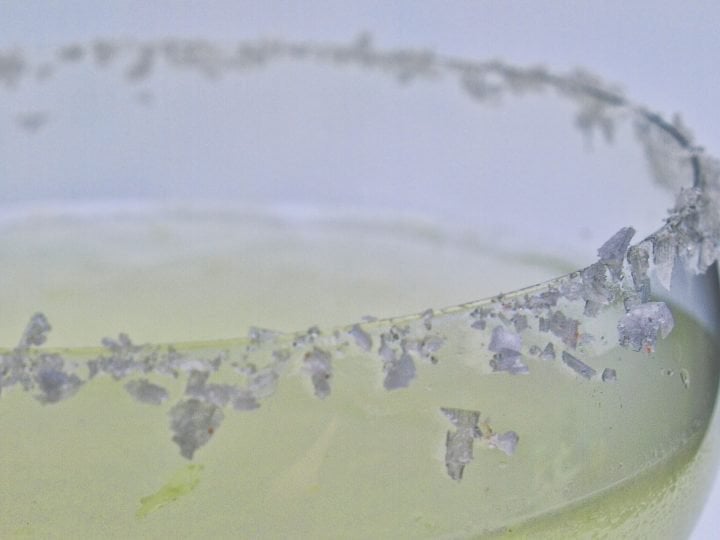
The Margarita is one of the most popular cocktails for a reason, when it is in balance it is simply enjoyable.
Ingredients
- 2 oz Tequila (Blanco)
- 1 oz Cointreau
- 1 oz Lime Juice
- ¼ oz Simple Syrup
Instructions
- In a cocktail shaker combine all ingredients with ice.
- Shake vigorously.
- Strain into a salt-rimmed stemware glass.
- No garnish necessary.
Notes
Because of the extra lime, there is a need for a little sweetener to provide balance. You can adjust the sweetness to fit your tastes.
Nutrition Information:
Yield:
1Amount Per Serving: Calories: 196Total Fat: 0gSodium: 140mgSugar: 16g
Freshly squeezed lime juice is a must, period, end of story. Unless you commit to that, you’ll never be able to produce a great Margarita.
One of the things I see a lot and disagree with is the use of Grand Marnier instead of Cointreau or triple sec. Some people think using a more expensive ingredient makes a better cocktail. Seems fine in theory, but doesn’t always work in practice. The flavour isn’t as clean as a triple sec, but the bigger problem is the Margarita can look terrible when using Grand Marnier. Let’s put it this way, brown and green are not the best colours to mix in a glass. I’ve witnessed some Margarita’s that looked horribly unappetizing because of the addition of Grand Marnier. Stick to a clear triple sec style liqueur or Curacao.
Should you add sugar to a Margarita? For a purist, no, but chances of having one of them sitting at your bar are slim unless you work in a bar that serves cocktail luminaries. The reality is, most people have adapted to a sweeter drink and the classic Margarita recipe can be a bit tart. Times change and drinks should evolve as well. A little additional sweetness helps to balance out the recipe and bridges the gap between classic and lime slushy. A ¼ oz is plenty of sugar, but feel free to adjust to your taste preferences, it is your drink after all.
Speaking of sugar, my personal preference is fructose instead of table sugar (sucrose). I find it works better with the lime’s tartness and gives a smoothness to the Margarita. You can find pure fructose at most health food stores.
If you are a practising bartender, your primary function is always sales, the secondary is cocktail conversion. This means that even though you may really like a Margarita that cockles your face, statistically most people do not. That means a little sweetness will keep people coming back. If you do find a person who likes some pucker power in their Margarita, you can always add more lime juice to balance it out, and then adjust their next order.
Agave Nectar
Using agave nectar as a sweetener has become a popular choice for bartenders lately. There is nothing wrong with it and on the surface, it probably does compliment the flavours of tequila but it is expensive and other than the agave connection doesn’t add much to the cocktail.
Margarita Salt Rim
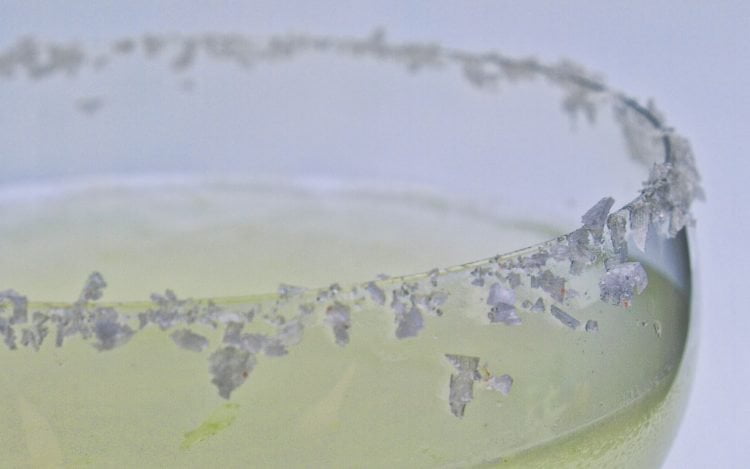
The salt rim is one of the key elements of a Margarita. Otherwise, it’s just a Tequila Kamikaze. Choosing a decent salt will help the drink. I like to use a flaked sea salt because the larger crystals dissolve slower on the tongue and don’t overpower your palate like regular, fine grain, table salt. Koshering salt works fine but is almost the same as common table salt, just larger grain. If you are feeling creative, you can pick up gourmet sea salts like Himalayan Pink, Grey Sea Salt, Fleur de Sel or Bolivian Rose Salt. For something fascinating try finding Vanilla Fleur de Sel or Bali Coconut and Lime Smoked Sea Salt.
The vanilla salt rim, even though none traditional, is a great way to increase perceived sweetness. Just using the aroma of vanilla has been scientifically proven to make people believe their drink is sweeter than it is, and it pairs well with tequila and lime.
The main thing to keep in mind is that the rim should be lightly salted, not encrusted. The Margarita is about balance, and should not taste like a “salt lick” found on a farm. If you still find that too salty, try mixing the rimming salt with a bit of sugar (courtesy of the Skinny Girl Margarita) or, better yet, fructose. One of the properties of crystalline fructose is that it causes a cooling sensation on the tongue when the crystals melt. Just another level of refreshing.
The interesting thing about this simple recipe is how the taste components interact with one another. The simplest example is the balance of sweet and sour.
Less obvious is how salt interacts. First, salt can dramatically reduce bitter flavours. On the surface, most people would say there is nothing bitter about a Margarita. In reality, there are many bitter components in this recipe. Triple sec, even though very sweet, is made from the bitter orange peel. Lime juice has many bitter components, even though we think of it as sour. Finally, tequila can be bitter to many people, partially because of the natural plant materials used in its production, plus alcohol is perceived as bitter by many people (super-taster and some normal tasters). When used in proper proportions, the salt reduces these bitter qualities and makes the Margarita very smooth and highlights the most agreeable flavours.
Additionally, salt decreases the tartness of the lime juice and increases the sweetness of the sugars in the Margarita. Finally, salt is a natural flavour enhancer so that it can improve the flavour of the cocktail. If done properly, salt may be the key component in a Margarita.
Sadly, so many bartenders have gone way overboard on the salt rimming, that it is now an “optional” component. Aside from the aversive taste of a mouthful full of salt, people worry about water retention from excess salt consumption. Assuming the salt is kept under control, the classic Margarita recipe weighs in at a mere 196 calories. Water retention is a lot easier to deal with than the calories from a sugar-laden cocktail.
Here’s my key recommendation for a great Margarita: Keep your salt rim as thin as possible and use larger salt crystals
If made properly, the Margarita is an absolute pleasure to drink. Given a classic Margarita recipe, with a proper salt rim, most people will refuse to go back to their once beloved Lime Green Slushies.
If you haven’t already checked it out, you should read the Skinny Girl Margarita post.