The class of drinks called “sours” are pretty standard. The general recipe is a spirit, lemon/lime, sugar, egg white and sometimes bitters. The Whisky Sour is a classic sour, which is probably the most commonly ordered one in North America. But you can have a brandy sour, a Midori sour or a Pisco Sour. Pisco is the national spirit of […]
Author: Darcy O'Neil
Vesper Martini
Before James Bond latched onto the Martini, the Vesper was his cocktail of choice.
How to Make a Martini
This may be the quintessential classic cocktail. Strong, simple and elegant, the Martini is timeless.
Spirited Awards Nomination
With Tales of the Cocktail 2011 on its way, nominations for the Spirited Awards are being solicited. With that being said, I’d love to get Fix the Pumps nominated in the Best New Cocktail/Bartending Book category. I’m setting my expectations at a reasonable level, considering that it is my first book and was self-published, just being nominated would be a […]
Transvaluation (Positive Contamination)
In life there are few things we automatically like or love, we usually need a positive introduction by a trusted person to acquire a taste. This process is called “Transvaluation” and is the technical term for positive contamination. Transvaluation is rare compared to negative contamination because it requires an object or person, of significant influence, to imbue another item with […]
Magical Thinking – Incorporation
In part one we looked at the Laws of Sympathetic Magic—Contagion and Similarity—and explained how they represent the sometimes illogical aspect of human nature. In this post I’ll expand on how these two laws influence human behaviour and how certain actions trigger emotional responses based on magical thinking. Many of the concepts aren’t necessarily new to anyone in the business, […]
Laws of Sympathetic Magic: Introduction
Science is based on observation and reproducibility, but prior to genuine scientific understanding, humans reasoned that unexplainable phenomenons were caused by supreme beings and magic. This mentality is still a significant part of human behaviour and should be factored in food and drink creation because the actions of people do not necessarily follow the most logical path. Even though these […]
Five Drink Predictions for 2011
It is that time of year where people like to predict what’s going to happen in the near future. And since I’ve been jumping on a number of bandwagons lately, why stop. Most of my predictions are less Nostradamus prophecy and more progressive thinking about where drinks are going. Or more likely, where I’d like drink trends to go. Feel […]
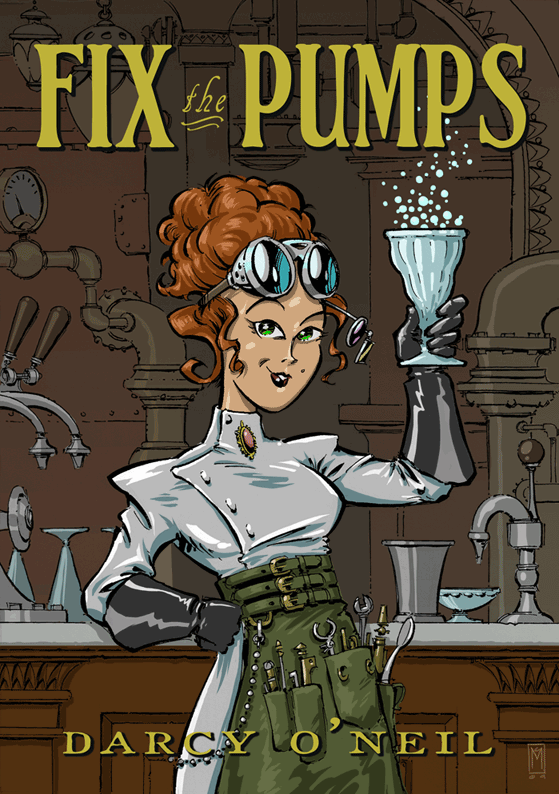
Book: Fix the Pumps
Fix the Pumps tells the real history of the soda fountain, starting with its invention, through its golden era of creativity and into its dependence on patent medicine and narcotics. The history of the soda fountain is as vibrant as any other period in American history. Fix the Pumps provides a wealth of information on techniques employed by soda jerks. […]
Soda Fountain History
Carbonated beverages are a resounding success, with Americans drinking 13 billion gallons (58 billion litres) of soda-pop every year. That’s about 3 quarts (3 L) per person, per week. Americans account for about half of the worldwide consumption. Considering that the US is only 5% of the world’s population, it’s safe to say Americans love their soda. Drinks are one […]
About Art of Drink
Art of Drink was spontaneously created in October 2005 as a way to document information on all things drink related. Darcy O’Neil had been bartending for a few years by this time and was unsatisfied with the drinks he was making and serving. This led him on a path of discovery, but having come from a scientific background, he felt […]
Darcy O’Neil
Darcy S. O’Neil was born in Sarnia, Ontario and spent many of those years living near the beach. A cold Canadian beach, but a beach none-the-less. After high school, the decision of a career choice was whittled down to chemistry or the culinary arts. Chemistry was the winner. At the time it seemed logical that laboratory skills were more transferable […]